Over Under Betting at Love Casino: A Closer Look for UK Players
Over Under Betting at Love Casino: A Closer Look for UK Players
Over-under betting is a straightforward way to wager on whether a number will finish above or below a threshold. It appears in sports betting, but the same principle can also help explain number-based casino games and their outcomes. For UK players exploring Love Casino, understanding the distinction matters: a casino game is not necessarily an over-under betting product, and the rules, odds and risks depend on the specific title and market.
This guide looks at how over-under bets work, what to check before playing, and how Love Casino fits into the picture. The casino’s current catalogue, availability and terms may change, so use the operator’s own information to confirm what is offered to you. To reach the site, players may use gb.lovecasinoapp-uk.com; check that the address is genuine and that the service is legally available in your location before entering personal or payment details.
What Does Over Under Mean?
An over-under bet asks whether a result will be higher or lower than a stated line. If a market sets a total of 2.5 goals, for example, “over” wins when the total is at least three, while “under” wins when it is zero, one or two. A line ending in .5 removes the possibility of a tie. Whole-number lines may have a push or refund outcome, depending on the market’s rules.
In a casino setting, a similar choice can be based on a card value, dice total or another randomly generated result. The exact rules are game-specific. The threshold, treatment of a tie, payout and any special symbols should all be stated in the game information. Never assume that a familiar-sounding “over under” game works like a sports market.
Finding the Right Experience at Love Casino
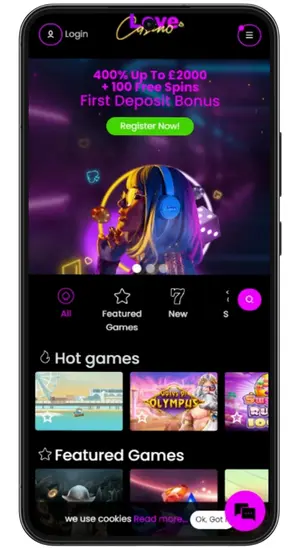
Love Casino is presented as an online casino brand for players seeking digital casino entertainment. Its games may include familiar categories such as slots, table games and live dealer titles, although the range visible to a UK visitor can depend on location, account status and current supply. A particular over-under title may not be available. Search the lobby or provider catalogue and read the game’s information panel rather than relying on a general description.
Before registering, check the operator’s legal name, licensing details, age restrictions, responsible-gambling tools and terms for the UK. A legitimate site should make these details easy to find. Confirm that the page uses a secure connection, and be cautious of adverts or links that imitate a casino brand. The domain name alone does not establish that a site is licensed or trustworthy.
How to Read an Over-Under Market
Three details shape the bet: the line, the selection and the price. The line defines the boundary; the selection is “over” or “under”; and the price indicates the potential return relative to the stake. A shorter price usually reflects a more likely outcome in the market’s estimate, but it does not guarantee that outcome. Casino games may display a payout instead of traditional odds, so compare the game’s stated rules rather than trying to translate every format directly.
- Check the threshold: note whether it is a whole number or includes a half-point.
- Read the settlement rules: find out what happens if the result lands exactly on the line.
- Understand the payout: establish whether the displayed figure includes the original stake.
- Look for conditions: special symbols, limits or bonus features can change how a round is settled.
Trying a Game in Demo Mode
If a demo is available, it can help you learn the interface without risking a cash balance. Use it to identify the controls, inspect the paytable and see how a round is resolved. Demo play is not a reliable forecast of real-money results: outcomes are random, and a short session cannot demonstrate what you will win or lose over time. Some demo versions may also use different limits or omit features found in the cash game.
When moving from a demo to real play, set a firm spending limit first. Decide how much you can afford to lose, and stop when you reach that amount. Avoid increasing your stake to recover losses; each new round remains uncertain. If you feel that gambling is becoming difficult to control, take a break and use available account limits, time-outs or self-exclusion tools.
Odds, House Edge and Expectations
The phrase “over” or “under” can sound like a near-even choice, but the two sides are not automatically equally likely or equally valuable. The distribution of possible results, the line position and the payout structure all affect the chance of a return. In a casino game, the rules may also include a house edge: over a large number of rounds, the expected return to players is below the total amount wagered.
For a simple illustration, imagine a fair six-sided die and a bet on whether the roll is over 3. The winning faces are 4, 5 and 6, so the chance is 3 out of 6, or 50%. A bet on under 3 has only two winning faces, since 1 and 2 qualify; rolling exactly 3 is neither selection under this wording. Change the rule to “3 or under,” and the probability changes. This example is not a prediction for a Love Casino game: real titles may use different random systems, result ranges and payouts.
Is an Over-Under Game Safe?
Safety has two sides: the integrity of the game and the suitability of gambling for the individual. A game’s fairness should be supported by the operator’s licensing and testing information, while the rules should explain how outcomes are determined. Verify those details through the casino’s official pages and the relevant regulator, rather than relying on a review or promotional claim alone.
No game removes financial risk. A legitimate random game can still produce losing streaks, and there is no strategy that guarantees a win. Treat gambling as paid entertainment, not as a way to make income. Do not play with borrowed money or funds needed for bills, and keep your account credentials private.
Questions and Answers
Does Love Casino definitely offer over-under betting?
Not necessarily. The available games and markets can change, and “over-under” may refer to a game mechanic rather than a dedicated betting section. Check the current lobby and the rules for the exact title you want to play.
Can I use a demo before depositing?
Some casino games provide a free-play mode, while others may not. If offered, demo mode is useful for learning the controls but cannot predict cash-play results. Confirm whether the demo uses the same features and limits as the real-money version.
What should I do if the result lands on the line?
Follow the game’s settlement rules. A whole-number threshold can allow a tie or push, but some games may settle it differently. A half-point line typically avoids an exact tie when results are whole numbers, though the game’s own rules remain authoritative.
How can I keep play under control?
Set a budget and time limit before starting, use account tools where available, and take regular breaks. Never chase losses. UK players who need confidential support can contact an established gambling-support service, such as GamCare, and should consider self-exclusion if they want to block access to gambling accounts.
What to Check Before You Play
For a UK player, the practical decision is not simply whether “over” or “under” sounds appealing. First establish that the casino is authorised to serve you, then confirm the specific game is available and read its rules. Compare the line with the possible outcomes, understand the payout, and decide in advance what amount and time commitment are acceptable.
Love Casino may provide a convenient online setting for exploring casino titles, but availability and product details should be verified directly. A demo can help with familiarisation, while responsible limits can reduce the chance of play becoming harmful. Neither changes the underlying uncertainty: every wager carries risk, and no outcome is guaranteed;